
From Emergentism to Coupling Theory: A Paradigm Leap in the Generative Mechanism of Life and Consciousness
Zhang Pan (pen name: Tianyuanzi)
Independent Researcher, Jining, Shandong, China
Abstract: Physicalist emergentism holds that “consciousness emerges from complex material systems,” yet it suffers from logical paradoxes and interpretive deficiencies. This paper argues that emergence is merely the degree of complexity required at the material level, while the coupling of Yuanling particles with a carrier is the key to consciousness generation. It deconstructs emergentism across five dimensions—material, logical, experiential, experimental, and criteria—revealing its confusion between carrier conditions and ontological generation, its inability to explain the discontinuous emergence of consciousness, its failure to assimilate anomalous data, and its standard confusion on issues such as the beginning of life and death determination. Introducing Yuanling Theory as an alternative framework, this paper demonstrates that the shift from emergentism to coupling theory constitutes a paradigm shift in life and consciousness research.
Keywords: Life Consciousness; Generation Mechanism; Emergentism; Coupling Theory; Yuanling Theory; Free Will; Anomalous Phenomena
1. Introduction
1.1 The Problem
Consciousness is the most familiar yet most perplexing phenomenon in the universe. Every person has direct and undeniable inner experience. But after centuries of philosophical inquiry and decades of neuroscientific exploration, we still cannot answer: What is consciousness? Where does it come from? Why does it exist? Why do we have the feeling of “I am here”?
This question is no longer merely a matter of pure theoretical curiosity. In August 2026, a Chinese research team announced to the world a discovery capable of rewriting physics textbooks. Relying on the Beijing Electron-Positron Collider, after fifteen years of effort, they confirmed for the first time the existence of a new form of matter called a “glueball.”
What makes the glueball special is that it is not composed of the protons, neutrons, and other particles we know, but purely of gluons (particles that transmit the strong nuclear force). In other words, scientists saw for the first time “matter made purely of force.” This discovery not only confirmed a theoretical prediction made nearly half a century ago by the late Nobel laureate Weinberg, but also overturned the traditional notion that “matter is composed of fundamental particles.”
Physicists spent half a century to confirm that “force can constitute matter.” The significance of this breakthrough is no less than discovering an entirely new form of matter—it proves that our understanding of “what matter is” is far from complete. And this precisely reminds us: our understanding of “what consciousness is” may likewise be constrained by the presuppositions of the current paradigm.
The mainstream answer in contemporary philosophy of mind and neuroscience is: consciousness is an “emergent property” of material system complexity. From Global Workspace Theory to Integrated Information Theory, from Higher-Order Theory to Predictive Processing, the physicalist framework shares a core claim: consciousness is not a fundamental constituent of the universe, but a “by-product” produced by sufficiently complex material organization during the course of evolution.
However, this claim has never been rigorously tested. It occupies a dominant position in academia not because it explains everything, but because it is almost the only option sanctioned by the establishment.
This is not explanation, but the abandonment of explanation. It substitutes an ontological question about “how existence is born” with an engineering question about “when a system is sufficiently complex,” and conceals the former within the latter.
This paper proposes an alternative framework—Yuanling Theory: consciousness does not “emerge” from material complexity, but is an ontological event in which Yuanling particles couple with a specific carrier. We will demonstrate that the paradigm shift from “emergentism” to “coupling theory” is a necessary turn in understanding life, consciousness, and existence.[1]
1.2 The Core Claims of Emergentism
The epistemological prototype of emergentism can be traced back to 19th-century British Emergentism, but its contemporary form relies primarily on complexity science. Its core narrative is: when the organizational complexity of a material system reaches a certain critical threshold, consciousness emerges from the physical substrate as a “higher-order property.”
This narrative has several theoretical variants in the contemporary context:
·Global Workspace Theory (GWT): Proposed by Bernard Baars, consciousness corresponds to the broadcasting of information in a global workspace. When information is simultaneously accessed by multiple cognitive modules, consciousness arises.[2]
·Integrated Information Theory (IIT): Proposed by Giulio Tononi, consciousness corresponds to a system's quantity of integrated information (Φ, Phi). Any system with Φ > 0 has some degree of consciousness; the higher the Φ value, the more complex the consciousness.[3]
·Higher-Order Theory (HOT): Proposed by David Rosenthal and others, consciousness arises from meta-representations of first-order mental states.[4]
The common point of these theories is: they reduce consciousness to the organizational mode of information processing, thereby anchoring it to a computable, measurable physical foundation.
1.3 The Argumentative Strategy of This Paper
This paper systematically questions emergentism across five dimensions:
Material composition level: The quantitative-to-qualitative change model of emergentism cannot explain the discontinuous emergence of consciousness.
Logical level: Emergent properties cannot causally act upon their substrate, leading to the free will paradox.
Experiential level: Emergentism cannot explain everyday anomalous phenomena such as dreams, ghost oppression, and infant night crying.
Experimental level: Emergentism cannot assimilate scientifically recorded anomalous data such as near-death experiences, split-brain experiments, and brain-computer interfaces.
Criteria level: Emergentism falls into standard confusion on practical issues such as the beginning of life, the determination of death, and AI consciousness.
This paper introduces “Yuanling Theory” as an alternative framework to “coupling theory.” This theory holds that consciousness is not an emergent property of matter, but an ontological event in which Yuanling particles couple with a specific carrier and establish a Strong Mutual Correlation. In other words, the generation of consciousness requires the intervention of additional subtle material energy/fields, rather than relying solely on the accumulation of its own material complexity.[1]
2. Deconstruction at the Level of Material Composition
The core claim of emergentism at the level of material composition is: consciousness is a product of material system complexity. This claim has multiple formulations in the contemporary context. Sperry's “emergent determinism” holds that consciousness is an emergent property of brain activity, related to but not reducible to neural mechanisms.[5] Feinberg and Mallatt's “neurobiological emergentism” claims that consciousness is a weakly emergent property produced by complex nervous systems during evolution, requiring “a complex nervous system suitable for maximizing emergent neurobiological features.”[6] Dennett's “multiple drafts model” understands consciousness as an emergent narrative of massively parallel processing, rather than the product of some “central theater.”[7] The common commitment of these theories is: as long as the organizational complexity of a material system reaches a certain critical threshold, consciousness will emerge from the physical substrate as a “higher-order property.”
This commitment constitutes the core narrative of emergentism at the level of material composition: from atoms to molecules, from cells to nervous systems, from brains to consciousness, complexity is depicted as a continuous “evolutionary ladder.” However, it is precisely this seemingly reasonable “ladder” that conceals three fundamental logical flaws. First, it conflates “carrier conditions” with “ontological generation”; second, it uses the dialectical framework of “quantitative-to-qualitative change” to conceal the discontinuous emergence of consciousness; third, it cannot provide a non-arbitrary definition of “complexity” and “threshold.” The following four sections will deconstruct these flaws one by one.
2.1 The Confusion of Two Problems in Emergentism
The fundamental logical flaw of emergentism at the level of material composition is that it substitutes two qualitatively different problems.
Problem A: What kind of material organization can support life/consciousness? This is a question about carrier conditions.
Problem B: How is consciousness generated? This is a question about ontological generation.
The answer of emergentism essentially dissolves B into A: as long as the carrier is sufficiently complex, consciousness automatically emerges. But this dissolution is a category confusion—complex organization is a “condition” for life, not the “cause” of consciousness. It is like “what kind of soil is suitable for planting trees” is not the same as “how a tree grows from a seed.”
In fact, Problem A is answered by emergentism/complexity science: carbon-based molecules, cell membranes, nervous systems, information integration networks... these are the conditions for the formation of potential life carriers. Problem B is answered by coupling theory: the generation of consciousness requires a coupling event between Yuanling particles and a life carrier—this is an ontological event, not a physical quantitative change.
2.2 The “Complexity Narrative” of Emergentism
From atoms to molecules, from cells to nervous systems, from brains to consciousness, emergentism depicts a seemingly reasonable “evolutionary ladder”:
Atoms (non-living) → Molecules (non-living) → Macromolecules (non-living) → Cells (living) → Tissues (living) → Nervous systems (conscious) → Human brain (highly conscious)
This narrative borrows the Hegelian dialectical framework of “quantitative change leads to qualitative change” and applies it to natural history. However, dialectics describes historical processes—mistaking historical description for causal explanation is a category application error of emergentism.
2.3 The Continuity of Material Composition vs. the Discontinuity of Consciousness
In terms of material composition, living and non-living entities have no essential difference at the atomic level. The human body is composed of carbon, hydrogen, oxygen, nitrogen, calcium, phosphorus, and other elements; a piece of granite is composed of silicon, oxygen, aluminum, iron, and other elements. The difference between them lies in the organization of atoms, not the types of atoms.
However, the emergence of consciousness is not a difference in degree such as “the organization is more complex,” but a discontinuity of “presence/absence.” Emergentism claims that this discontinuity is a “qualitative change,” but it cannot specify: in the continuous process of chemical organization, which step, which new chemical bond formation, marks the birth of consciousness?
Thought Experiment: Gears and Clocks
Suppose we accumulate more and more gears, from 1 to 10, to 100, to 10,000. Eventually, we assemble a precision clock. The clock can tell time, chime, and self-repair (if properly designed). But no matter how much we increase the complexity of the gears, the clock will never “feel” the passage of time. It can measure time, but it cannot experience time.
The relationship between consciousness and matter is not the relationship of “gears accumulating into a clock.” The functions of a clock can undergo quantitative-to-qualitative change, but experience is not some “higher form” of function.
Of course, panpsychists can insist that the clock also has “micro-consciousness.” But in that case, the concept of “consciousness” loses its discriminating power. It will be unable to distinguish between a clock, a photodiode, and a human brain. A concept that cannot distinguish anything is not an explanation, but a label.
2.4 Three Incommensurable Definitions of Complexity
The core concept of emergentism is “complexity,” but it is itself a semantic ruin, with at least three completely different definitions of complexity:
Algorithmic complexity (Kolmogorov Complexity): The length of the shortest program required to describe a system. A digital computer can have extremely high algorithmic complexity.
Integrated information (IIT's Φ value): The degree of causal interaction among a system's parts. A highly modular system may have high algorithmic complexity but low Φ value.
Thermodynamic complexity (entropy production rate): A system's ability to maintain a non-equilibrium state. A plant's root network may have very high thermodynamic complexity.
These three forms of complexity do not necessarily covary. Emergentism cannot answer which type of complexity is the relevant variable for “consciousness emergence.” IIT chooses integrated information, but why not algorithmic complexity? GWT chooses global broadcasting capacity, but why not thermodynamic complexity? Every choice is post-hoc attribution, not a priori derivation.
2.5 The Threshold Problem: The Achilles' Heel of Emergentism
Even if a certain complexity metric is selected, the delineation of the threshold remains arbitrary.
IIT founder Tononi believes that any system with Φ > 0 has some degree of “micro-experience.” This means: a photodiode (with extremely small but nonzero Φ) has “micro-consciousness”; a stone (if it has some internal information integration) might also have “proto-consciousness.” This leads to panpsychism: emergentism, in order to explain consciousness, is forced to generalize consciousness to all matter.[1]
But if one does not accept panpsychism and only acknowledges that “sufficient complexity yields consciousness,” then where should the threshold be drawn? Bacteria? Jellyfish? Insects? Fish? Every demarcation is post-hoc attribution. Emergentism has never truly predicted which new material system would have consciousness; it only retroactively finds physical correlations for already observed phenomena.
2.6 “Potential Carrier” ≠ “Consciousness Itself”
The fundamental confusion of emergentism lies in equating “carrier formation” with “consciousness generation.”
The complex organization of material systems, such as cell membranes, nervous systems, and the cerebral cortex, are indeed conditions for the manifestation of consciousness. Without these carriers, consciousness cannot establish a stable interactive interface with the material world. But the carrier is only the stage, not the drama itself.
The logic of emergentism is equivalent to: build a radio, and the radio signal will automatically appear. But no matter how sophisticated the radio, without electromagnetic waves, it will only produce static. No matter how complex the material system, without the coupling of Yuanling particles, it is merely a “finely crafted dead thing.”
2.7 The Alternative of Coupling Theory: Coupling Event Ontology
Yuanling Theory proposes a fundamentally different model: coupling event ontology.[1]
Consciousness does not “pop out” of complexity, but is “generated” from a coupling event. That is to say, the generation of consciousness requires the intervention of other subtle material energy before it can be generated, rather than emerging from its own material complexity.
In Yuanling Theory, consciousness is the functional manifestation of the experiences, perceptions, cognitions, emotions, and will possessed by a life individual within the spatiotemporal framework. Yuanling is the independently existing ontological subject of that individual consciousness. It is born from the event in which “Yuanling particles” successfully couple with a specific life carrier and form a “Strong Mutual Correlation,” and is an “energy-information” complex dynamically generated by a unique “Consciousness DNA” code, with its structural form and functional attributes constrained and shaped by the physical form of its carrier.
Consciousness DNA is a deep informational coding structure that determines the absolute uniqueness and fundamental evolutionary direction of each Yuanling. It governs the dynamic generation of Yuanling and is continuously enriched and shaped through “Interactive Evolvability.”
Strong Mutual Correlation is the stable, self-sustaining coupling state formed between Yuanling and its carrier. It is the hallmark of the life-state.
Yuanling particle is the fundamental unit constituting “Yuanling.” It is a ubiquitous, yet-to-be-discovered fundamental physical quantity in the universe, and is the primordial material of conscious phenomena.
Yuanling Particle Field is the “consciousness ecology” cosmic background field composed of countless “Yuanling particles,” and is also the substantial foundation for the functions and interactions of “Yuanling.” This field constitutes a “subtle physical level” that coexists and interacts with the ordinary material world. It is the ontological field inhabited by Yuanling particles; the Non-Spatiotemporal Background and spatiotemporal reality interact through this field.
Coupling specifically refers to the directional binding and structuring event that occurs at a specific energetic node at the inception of life, between “Yuanling particles” and the life carrier matrix, according to the blueprint of “Consciousness DNA.” This process is the “generative mechanism” through which Yuanling comes into being. Coupling is not a gradual process, but a discrete, energy-concentrated event. It establishes the fundamental connection between the primordial material of consciousness and the physical carrier. It is the ontological threshold through which potential consciousness is actualized, transforming a mere biological organism into a life-state with first-person experience.
The difference between emergentism and coupling theory lies in a “hierarchical leap”: emergence merely complexifies simple matter/systems into potential life carriers, whereas coupling with Yuanling particles is the necessary condition for the generation of consciousness. Without coupling, there is no Yuanling generation, and thus no consciousness. Figure 1 illustrates the hierarchical leap from material systems to the generation of life and consciousness.
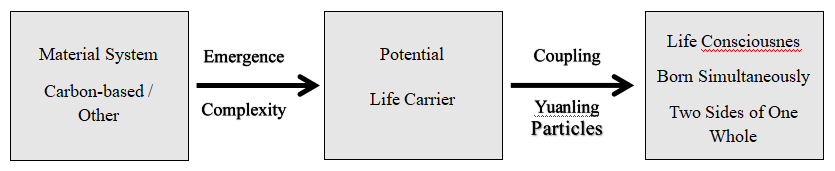
Figure 1. Schematic diagram of the generation of life and consciousness
This model eliminates the “threshold anxiety” of emergentism. The emergence of consciousness is not a “quantitative-to-qualitative change,” but a coupling generative event. Just as the formation of a fertilized egg is not a “quantitative change in cellular complexity,” but a “qualitative change in the beginning of a new life.”
Life and consciousness are two sides of the same coin. Successful coupling means the birth of both life and consciousness. The material structure and form of the life carrier (biological hardware) determines the “user interface” for the self-expression of Yuanling (the ontological subject of consciousness).
3. Deconstruction at the Logical Level
3.1 The Free Will Predicament of Emergentism
Physicalist determinism faces an ancient paradox: if all events (including human choices) are necessarily determined by prior physical states, then the act of “discovering determinism” is itself a necessary output of physical states. This means:
The belief “I believe in determinism” is not cognitively superior to the belief “I believe in free will,” because both are outputs of neural algorithms.
The scientific achievement of “discovering the truth of determinism” is no more valuable than the error of “believing the earth is flat,” because both are necessary nodes in the causal chain.
Francis Crick declared in The Astonishing Hypothesis: “You are nothing but a pack of neurons.”[8] But if “I” am nothing but a pack of neurons, then how can the meta-cognitive act of “a pack of neurons discovering that it is a pack of neurons” have any normative cognitive status?
3.2 The Logical Paradox of “Emergent Properties Causally Acting Upon Their Substrate”
Emergentism attempts to resolve this predicament with the concept of “levels”: consciousness is a “higher-order property” of the brain, just as “wetness” is a “higher-order property” of H₂O molecules. Although higher-order properties cannot be reduced to lower-order properties, they can causally act upon lower-order properties.[9]
However, this claim is logically inconsistent:
·If consciousness is an emergent property of the brain, then it is like “wetness” in relation to water molecules. Wetness cannot causally act upon water molecules; it is merely a description of the collective behavior of water molecules.
·If consciousness can “reversely control” the brain, such as “I decide to raise my right hand,” then consciousness is not an emergent property, but an entity with independent causal power.
·Smoke cannot control fire; wetness cannot control water molecules; emergent properties cannot causally act upon their substrate.
This is known as the “Downward Causation” problem. Emergentism must either accept causal closure (consciousness is merely epiphenomenal and cannot truly control behavior), thereby dissolving free will; or accept downward causation, thereby abandoning the core claim of emergentism (that consciousness is merely a higher-order property).
3.3 The Solution of Yuanling Theory: Will as an Energy-Information Vector
Yuanling Theory resolves this paradox by redefining the ontological status of consciousness.
In Yuanling Theory: Yuanling is not an emergent property of the brain, but an ontological subject coupled with the brain. The brain is the carrier (biological hardware), and Yuanling is the ontological subject of consciousness (an energy-information complex). The two form two sides of one whole through “Strong Mutual Correlation,” but Yuanling possesses ontological independence.
Free will is thus redefined as: the qualitative manifestation of the “Absolute Uniqueness” of life consciousness at the level of decision and action. It is manifested as each conscious node (Yuanling), under the constraints of cosmic laws, making creative choices that cannot be fully predicted, based on its unique “Consciousness DNA” structure. It is not a negation of causality, but the active navigation of a unique node within the web of laws.
The specific mechanism is “Resonance Evaluation”: Yuanling, based on its Consciousness DNA structure, makes resonant judgments on different “frequency patterns” in the field of future possibilities through the “Higher-Order Value Field” (frequency patterns refer to the energy-information characteristics of different paths in the field of future possibilities; Higher-Order Value Field refers to the energy-information field anchored by fundamental cosmic laws, possessing high order and stable frequency), choosing the direction most compatible with its own structure. This is not “magic outside causality,” but the causal influence of energy-information vectors at the Yuanling level upon the carrier level.[1]
3.4 The Explanatory Gap of Creative Thinking
Emergentism can only explain “reorganizing existing data” (like AI pattern matching), and cannot explain “generating completely new information,” such as Einstein's theory of relativity, an artist's original inspiration, or a moral pioneer's transcendent principles. If consciousness is merely the output of neural computation, then all new thoughts and new theories are just rearrangements of old neural connections, and true creativity is impossible.
Yuanling Theory holds that creativity is the “new patterns” captured when Yuanling resonates with the cosmic information field (the Yuanling Particle Field). These patterns are not pre-existing data stored in the biological brain, but precise information far beyond the spectrum of ordinary senses, directly received by Yuanling through Transcendent Perception, and then translated into comprehensible creative expressions through the “Cultural Interfacing” attribute—thereby achieving the “discovery” and “realization” of infinite possibilities in the Non-Spatiotemporal Background.[1]
4. Deconstruction at the Experiential Level: Everyday Anomalous Phenomena
Methodological statement: The following phenomena are not experimental evidence that “proves” Yuanling Theory. Within the framework of the philosophy of science, they are “anomalous data” that emergentism cannot explain but are naturally accommodated by Yuanling Theory—the signal of “paradigm crisis” as Thomas Kuhn described.[10]
4.1 The Multiple Forms of Dreams
Dreams are not a single phenomenon. Emergentism reduces all dreams to “REM-period neural noise,” which is a category application error. It is like classifying all “sound” as “air vibration,” thereby failing to distinguish music, language, and noise.
Ordinary Dreams
Emergentism's explanation: random neural activation during REM sleep, prefrontal inhibition leading to the failure of logical monitoring, with the brain synthesizing narratives to integrate daytime memories and emotions.
Yuanling Theory's explanation: during periods of partial relaxation of “Strong Mutual Correlation,” Yuanling integrates daytime memories and emotions through the residual activity of biological interfaces. Dreams are Yuanling's “background maintenance” during the carrier's dormancy. They are not random combinations of neural noise, but the classification, archiving, and preliminary integration of experience by Consciousness DNA.
Recurring/Traumatic Dreams
Phenomenon: specific dreams recur repeatedly, often accompanied by intense emotions.
Emergentism's explanation: neural circuits of traumatic memories become fixed.
Yuanling Theory's explanation: deep imprints in Consciousness DNA (such as early life trauma) seek integration and release through dreams. Repetition is not a “neural fault,” but an attempt at self-repair by Yuanling.
Dream Visitations
Phenomenon: the deceased or distant relatives convey clear information in dreams, later verified.
Emergentism's dilemma: unable to explain the spatial accuracy of the information, let alone the intentionality of the “deceased.” If dreams are merely internal brain activity, where does information about “external real events” come from?
Yuanling Theory's explanation: the Yuanling Particle Field is rooted in the Non-Spatiotemporal Background, allowing different Yuanlings to resonate across space-time through shared frequencies, making dreams a “low-impedance window” for information exchange. During sleep, the filtering function of biological interfaces is reduced, making it easier for Yuanling to receive information packets from other Yuanlings.
Precognitive Dreams
Phenomenon: dream content is verified within hours or days.
Emergentism's explanation: dismissed as “coincidence” or “confirmation bias.”
Yuanling Theory's explanation: in the coupling-relaxed state, Yuanling can perceive the probability distribution of the “field of future possibilities.” Dreams become implicit readings of “temporal grammar.” They are not deterministic prophecies, but perceptions of high-probability paths.
4.2 Ghost Oppression
Emergentism's explanation: sleep paralysis or possibly accompanied by hallucinations, a physiological malfunction of the REM-period motor inhibition system, preventing movements in dreams from being translated into real-life actions.
Unexplained phenomena: a clear “sense of malevolent presence”: not a vague discomfort, but a definite experience of “being oppressed”; the “intentionality” of the oppressive sensation: many experiencers report that the oppression has the clear intention of “draining energy” or “preventing breathing”; instantaneous relief after focused willpower counterattack: if it were purely a physiological fault, why can subjective will “repair” neural inhibition?
Yuanling Theory's explanation: the medical explanation of ghost oppression is a category application error. Physiological malfunction is the surface manifestation; the essence is the real energy interaction between Yuanlings (intentional or unintentional, benevolent or malevolent) in the Yuanling ecology. Yuanling completes its defense through “frequency stabilization” (not fearing), “perceptual scanning” (identifying the source of intrusion), and “will counterattack” (high-frequency energy directed impact).
4.3 Persistent Infant Night Crying
Emergentism's explanation: colic, immature nervous system development, parent-child interaction stress.
Unexplained phenomena: persistent crying without medical abnormality; temporal regularity of night crying (such as at specific hours); rapid effectiveness of specific rituals (such as “soul calling,” “startle calming”).
Yuanling Theory's explanation: the bioenergetic field of infants is open and unstable, easily susceptible to interference from negative environmental energy-information (such as Chaotic Wanderers: consciousness entities with diffuse structure and low-frequency disorder). Specific rituals construct energy barriers and reorganize the field through cultural interfaces (specific sounds, movements, symbols), stabilizing Yuanling.
4.4 The Effectiveness of Folk/Religious Rituals
Emergentism's explanation: placebo effect, alleviation of caregiver anxiety, social support.
Unexplained phenomena: cross-cultural universality (similar ritual structures across different cultures); specificity (beyond ordinary placebo effects); the “will-focusing” effect of ritual practitioners (significant differences in effectiveness between different practitioners).
Yuanling Theory's explanation: cultural interfaces serve as “translators” and “amplifiers,” transforming abstract “energy-information” interactions into executable embodied practices. Rituals are not all “superstition,” but remnants of consciousness interaction technology—a “user manual” formed through long-term cultural evolution that can influence the ontological subject of consciousness (Yuanling).
4.5 Intuitive Premonitions
Phenomenon: ordinary people suddenly feeling uneasy and avoiding accidents, or experiencing strong palpitations when loved ones are in danger.
Emergentism's explanation: coincidence, memory reconstruction, post-hoc attribution.
Yuanling Theory's explanation: resonance of the Yuanling Particle Field in the Non-Spatiotemporal Background. The holographic memory of Consciousness DNA enables Yuanling to receive precise information far beyond the spectrum of ordinary senses. This is not “superpower,” but the manifestation of Yuanling's inherent Transcendent Perception under specific conditions.
5. Deconstruction at the Scientific-Experimental Level: The Challenge of Anomalous Data
If the phenomena in Chapter 4 can still be avoided by physiological models as “marginal cases,” then the following cases, recorded, verified, or systematically studied through scientific methods, constitute “anomalies” that physiological models cannot assimilate within the scientific chain.
5.1 Lucid Dreams
Phenomenon: the dreamer realizes they are dreaming and can actively control dream content.
Scientific verification: Stephen LaBerge at Stanford University (1980s) established two-way communication with subjects during REM sleep through eye-movement signals, proving the reality of lucid dreams. Subsequent fMRI and EEG studies showed that during lucid dreams, the prefrontal cortex (particularly the dorsolateral prefrontal cortex) is significantly activated—precisely the brain region responsible for self-awareness and metacognition.[11]
Emergentism's dilemma: if consciousness is an emergent property of the brain, why can it “supervise” the brain's own activity? This is like “smoke controlling fire”—how can an emergent property monitor its substrate?
Yuanling Theory's explanation: Yuanling's Self-Referential Capacity[12] is partially activated during dreams, achieving active navigation of Cosmic Mapping. Yuanling does not “wake up from the dream,” but recognizes itself within the dream.
5.2 Near-Death Experiences (NDE)
Phenomenon: systematic experiences reported by survivors after clinical death (cardiac arrest, flat EEG): out-of-body perspective, passing through a tunnel, encountering light, life review, meeting the deceased.
Scientific records:
Raymond Moody, in his 1975 book Life After Life, systematically documented over 100 cases of NDE and identified 15 common features of NDE.[13]
Sam Parnia and colleagues, in the 2014 AWARE study, installed special image boards in multiple hospitals to test whether patients could accurately report visual information from an out-of-body perspective.[14]
Blind NDE: some congenitally blind individuals reported “visual” experiences during NDE, describing three-dimensional space, colors, light—things they had never perceived through vision.[15][16]
Emergentism's dilemmas:
How can a highly structured, narratively coherent conscious experience with lasting personality-transforming effects occur when cortical electrical activity is severely suppressed or even clinically flat?
Blind NDE “visual” experiences: no visual neural activity yet reporting vision—where is the neural mechanism?
Permanent personality transformation of experiencers: value restructuring, elimination of death fear. Drugs or oxygen deprivation cannot explain this persistent transformation.
Yuanling Theory's explanation: Yuanling's “out-of-body” perception at the moment of weakest carrier-connection. Yuanling temporarily detaches from the constraints of biological interfaces and directly perceives information through the Yuanling Particle Field. “Life review” is a rapid scan of Consciousness DNA's holographic memory; “light” is the high-frequency resonance manifestation of the Yuanling Particle Field.
5.3 Split-Brain Experiment
Phenomenon: Roger Sperry and Michael Gazzaniga conducted a series of classic experiments in the 1960s on epilepsy patients with severed corpus callosum. After the integration of information between the two hemispheres was interrupted, the left hemisphere (language-dominant) could not perceive information received by the right hemisphere (spatial/emotional-dominant), but the right hemisphere could still independently process information and drive behavior.[17]
Scientific record: Sperry received the 1981 Nobel Prize in Physiology or Medicine for this work. Subsequent studies showed that after separation, the two hemispheres each possess independent centers of conscious activity.
Emergentism's dilemmas:
Why can two independent “centers of consciousness” coexist within one skull?
If consciousness is the holistic emergence of the brain, why is the result of severing the connection not “half a consciousness” but “two consciousnesses”?
The right hemisphere's independent decision-making and emotional responses—emergentism cannot explain how “holistic emergence” splits into “two independent emergences.”
Note: Gazzaniga's later research acknowledged that his early “left-hemisphere interpreter” theory was oversimplified, and that the two hemispheres may still maintain limited integration through brainstem or subcortical structures after separation. But this revision does not weaken the core puzzle's validity: within one skull, why can two relatively independent centers of conscious activity be observed?
Yuanling Theory's explanation: split-brain is not “one consciousness being split,” but the partial disruption of the coupling between one Yuanling and two hemispheric carriers. Each hemisphere becomes a relatively independent “local interface,” processing information and generating local Cosmic Mapping. This confirms that Yuanling is not an emergent product of the brain, but an ontological subject coupled with the brain—the coupling can be partially interrupted, but Yuanling itself is not “cut.”
5.4 Brain-Computer Interfaces: The Experimental Boundary of Consciousness Transferability
Phenomenon: Brain-Computer Interface (BCI) technology enables locked-in syndrome patients to directly control external devices through brain signals. A 2026 clinical study published in Communications Medicine showed that multi-session BCI methods could increase the detection rate of minimally conscious states from 39% to 69%.[18]
Emergentism's dilemma: if consciousness equals the material activity of the brain, then “consciousness uploading” should in principle be possible.[19] However, the “code-switching” hypothesis (that consciousness is substrate-independent information processing) creates tension with emergentism's material binding claim: if consciousness can exist apart from its original biological substrate, then it is not “emerging from matter,” but possesses an ontological status independent of material carriers.
Yuanling Theory's explanation: BCI merely extends Yuanling's expressive interface, rather than “transferring” or “splitting” the ontological subject of consciousness. Even if “brain information uploading” were to be realized in the future, what would be formed would be merely a “digital persona.” It might simulate the original owner's behavioral patterns, but it cannot inherit the original owner's sense of “I,” because it lacks the historical coupling with the original Yuanling.
5.5 Consciousness Detection in Vegetative/Minimally Conscious States
Phenomenon: Owen et al. (2006) published a study in Science using fMRI to detect that a vegetative patient could follow instructions to perform imagined tasks (such as imagining playing tennis), with activation patterns similar to healthy individuals.[20]
Emergentism's dilemma: the brain is severely damaged—why does conscious activity still exist? If consciousness is an emergent property of the brain, damage should cause consciousness to disappear, but this is not the case.
Yuanling Theory's explanation: the coupling between consciousness (Yuanling) and the carrier (brain) is partially disrupted, but Yuanling itself has not disappeared. The motor output channel (the coupling output terminal) is damaged, but the cognitive channel (the input/processing terminal) remains open.
5.6 Neuroplasticity Research: Meditation and Consciousness Training
Phenomenon: fMRI studies of long-term meditators show structural brain changes (increased gray matter density, altered default mode network activity).[21]
Emergentism's dilemma: if consciousness is the passive emergence of brain complexity, why can active consciousness training structurally change the brain? Consciousness here has an “active shaping” capacity, rather than being a passive product.
Yuanling Theory's explanation: Yuanling actively optimizes its own structure through “Interactive Evolvability”—this is Yuanling's core process attribute. The brain is merely the biological interface for this process. Interactive Evolvability refers to the dynamic process through which it continuously shapes, optimizes, and complexifies its own “Consciousness DNA” structure through sustained interaction with other Yuanlings, consciousness fields, and the material world.
5.7 Neuromodulation and the “Interface vs. Generator” Boundary
Phenomenon: TMS, DBS, and other neuromodulation techniques can alter conscious states.[22]
Yuanling Theory's differentiating explanation: this only proves that the brain is a “functional correlation” for the expression of consciousness, not a “creative generation.” If consciousness is a product of the brain, changing brain states should be able to fully “create” or “eliminate” consciousness. But in reality, neuromodulation can only alter the form of consciousness within its existing range; it cannot generate consciousness in an unconscious system. This precisely proves: the brain is an interface, not a generator. Damage to the interface affects the transmission of signals, but the signal source itself does not disappear.
5.8 Cloning Experiments: Identical Genes ≠ Identical Consciousness
Phenomenon: a 2025 study (Felici et al., Journal of Veterinary Behavior, 2025) assessed the personality traits of 12 cloned minipigs from three cloned groups, finding that even animals from the same cloned group could develop different cognitive and behavioral traits.[23] Another study further confirmed that, under rigorously controlled experimental conditions, cloned fish still exhibited behavioral differences. Genetics experts clearly stated: “Cloning does not transfer personality traits, memories, or behavioral characteristics to a new organism.” Twin studies (Polderman et al., Nature Genetics, 2015) similarly show that even with identical genes, personality and conscious experience still show significant differences.[24]
Emergentism/reductionism's dilemma: if consciousness is the emergence/reduction product of material system complexity, and genes determine the basic structure of the material system (the brain), then genetically identical clones should possess identical or highly similar consciousness. But this is not the case.
Emergentists might say: identical genes do not equal identical brain structure; developmental noise and environmental differences also cause brain differences. But this response precisely exposes the deep problem of emergentism: if consciousness is determined by the brain's microscopic structure, and the brain's microscopic structure is affected by countless random factors, then the proposition “consciousness is a product of the brain” loses predictive power—it cannot predict what consciousness any particular brain will produce, only attribute post-hoc.
Yuanling Theory's explanation: biological DNA encodes the physical carrier; Consciousness DNA encodes the ontological subject of consciousness. Cloning can only replicate biological DNA; it cannot replicate Consciousness DNA. The reason is that Consciousness DNA is not inherited from parents at fertilization, but newly generated when Yuanling particles couple with the carrier. Consciousness DNA is the deep informational coding structure that determines the absolute uniqueness and fundamental evolutionary direction of each Yuanling. Every coupling is a brand-new coupling event, generating a brand-new, absolutely unique Consciousness DNA code. This is experimental evidence of the “non-replicability of consciousness”—the unique dignity of the individual is rooted in the cosmological dimension, not merely a biological fact.[1]
6. Deconstruction at the Criteria Level: Social and Ethical Reflections
After revealing the predicaments of emergentism at the material, logical, experiential, and experimental levels, we turn to a more fundamental question: when we shift our perspective from “what is consciousness” to “when does consciousness begin, when does it end, how is it determined,” we discover that these seemingly scientific questions are, in essence, products of social construction.
This chapter aims to reveal a long-neglected fact: the standard confusion on issues such as the beginning of life, the determination of death, and AI consciousness is essentially a problem at the level of social construction, not a problem at the scientific or philosophical level. We cannot “measure” whether Yuanling particles are coupled through any experimental means; therefore, any statement about “coupling occurrence = birth of life” or “coupling termination = death” can only be a theoretical presupposition at the current stage, not an operable scientific fact. The role of this chapter is not to provide a set of operable unified standards, but to reveal the constructive nature of existing standards and to point out directions for future research.
6.1 The Standard Confusion of the Beginning of Life: The Predicament of Determination from Fertilized Egg to Birth
When does life begin? This question has sparked long and fierce debates among medicine, law, ethics, and philosophy. Notably, the core of this debate is not the discovery of scientific facts, but the “cutting” and “defining” of a continuous biological process by different social forces.
From a biological perspective, from fertilized egg to newborn is a continuous developmental process, with no point at which “non-life suddenly becomes life.” However, society needs to draw a line at some node to define “the beginning of life” to meet practical needs such as abortion legislation, embryo research, and medical insurance.
Table 1. Criteria for determining the beginning of life
Criterion | Main Supporters | Core Dilemma |
Moment of fertilization | Some religious and conservative legal scholars | Is the fertilized egg a "potential person" or "already a person"? Who draws the line between "potential" and "actual"? |
Moment of implantation | Some medical ethicists | Pre-implantation embryos can naturally be lost; if counted as "death," natural miscarriage equals mass death |
Neural tube formation | Some developmental biologists | The nervous system begins to develop, but is far from any recognized "consciousness" complexity |
Brain electrical activity | Some neuroethicists | When does fetal brain electricity appear? When does it count as "conscious"? How to explain brain electrical differences at different gestational ages? |
Moment of birth | Most legal and medical scholars | The moment before and after birth—material composition is completely identical, why does legal status suddenly change? |
The common feature of these criteria is: none is derived from scientific facts about “whether consciousness already exists.” They are all “operational definitions” chosen by society to meet practical legal, medical, and ethical needs in the absence of a unified ontological standard. Every demarcation is a disguise of value judgment, not a derivation from scientific facts.
6.2 The Standard War of Death Determination: From Heart to Brain, From Biology to Society
Death determination is more urgent than the beginning of life because it directly relates to practical matters such as organ transplantation, hospice care, and legal inheritance. The historical evolution of death determination criteria clearly demonstrates the complex entanglement between “scientific facts” and “social construction.”
From cardiopulmonary death to brain death: The historical evolution of criteria
Traditional standard (cardiopulmonary death): Cardiac arrest + respiratory cessation. This standard was almost the only social consensus for thousands of years. Irreversible cessation of heartbeat meant the end of life. Before the emergence of modern medical technologies such as ventilators, this standard was highly consistent with the natural process of death.
1968 Harvard Standard: The Harvard Medical School Ad Hoc Committee proposed “irreversible cessation of brain function” (including the brainstem) as a new standard for death.[25] This standard was not proposed purely on the basis of scientific discovery—1968 was a critical period for breakthroughs in heart transplantation technology, and the proposal of the “brain death” concept coincided highly in time with the demand for organ transplantation. Critics pointed out: defining brain death is pure utilitarianism, legalizing “organ harvesting,” and the committee's main purpose was organ transplantation.
1981 United States Uniform Determination of Death Act (UDDA): Defined death as “irreversible cessation of circulatory and respiratory functions” or “irreversible cessation of all functions of the entire brain.” This act legally confirmed the “either-or” standard framework.[26]
2010 American Academy of Neurology (AAN) Guidelines: Updated brain death determination guidelines, emphasizing clinical examination as primary and ancillary testing as supplementary.[27]
Internal division within the medical community
Different countries have significant differences in the implementation of death standards, exposing an awkward fact: death determination criteria vary from place to place.
Table 2. Death determination criteria
Country/Region | Adopted Standard | Implementation Characteristics |
United States | UDDA (whole-brain death or circulatory death) | Implementation varies by state; some states allow religious exemption for families |
United Kingdom | Brainstem death | Definition of brainstem death differs slightly from the United States |
Japan | Strict confirmation after cardiac arrest | Brain death used only in organ donation scenarios |
Germany | Whole-brain death | Requires multiple confirmations; strict process |
China | Brain death standard not yet legislatively unified | Clinical practice mainly uses cardiopulmonary death |
The questioning from philosophy and legal circles is equally profound: from a biological perspective, dividing the boundary between life and death by brain function is artificial. Because from life to death is a process, and brain death is only one stage in this process. No matter which moment is chosen to define the death of the entire organism, as long as that moment is earlier than the complete destruction of the entire organism, it involves value judgment.
The constructive nature of death determination
The predicament of death determination reveals the deep problems of existing standards:
Brain-dead patients can gestate fetuses: Records show that the bodies of brain-dead women can maintain pregnancy with medical support; body temperature, heartbeat, endocrine function, and fetal development can all continue. For example, there are case reports of brain-dead pregnant women successfully delivering healthy babies after 100 days of life support, and another case of successful delivery after 117 days of somatic support, with the infant developing normally at 1-year follow-up. This indicates that certain organismal integrative functions are not completely lost due to brain death.[28][29]
Cells are still metabolizing and repairing: After brain death, the body's cells do not immediately cease activity. Studies show that after brain death, mitochondria in donor organs still participate in the regulation of cellular stress responses; mitochondrial damage activates systems such as fission, fusion, biogenesis, and mitophagy. Autophagy is an important mechanism by which cells clear damaged components and perform self-repair. This indicates that cellular-level metabolic and repair activities continue after brain death.[30]
Death standards vary across cultures and time periods: If death were a pure scientific fact, it should not vary from place to place or from time to time.
Conclusion: Death determination is not a pure scientific fact, but a product of social construction. It is an operational definition shaped by multiple forces—medicine, law, ethics, religion—in the absence of a unified ontological standard.
6.3 The Standard Predicament of AI Consciousness Determination
The current debate about “whether AI has consciousness” is essentially facing the same predicament as the beginning of life and death determination: we lack a unified standard for determining the existence of consciousness.
The Turing Test was once widely accepted as the criterion for “whether machines can think,” but its essence is a behaviorist standard—as long as AI's behavioral performance is indistinguishable from humans, it is considered intelligent. However, “behaving like a human” does not equal “having subjective experience.” Subsequent alternative standards (such as functionalism, Global Workspace Theory) similarly face the inherent contradiction of “behavioral standard vs. experiential standard.”
The more fundamental problem is: even if AI demonstrates complex emotional simulation, self-reference, or ethical reasoning in the future, how do we determine whether these performances are “genuine subjective experience” or “more advanced simulation”? In the absence of a unified theory of the ontological subject of consciousness, any determination standard inevitably carries constructiveness. They are operational definitions shaped by multiple forces—society, technology, commerce—rather than scientific derivations based on the nature of consciousness.
6.4 The Response of Yuanling Theory: An Honest Theoretical Positioning
Facing the above constructive predicament of determination standards, Yuanling Theory provides an honest theoretical positioning.
Life is the dynamic process in which the Yuanling (the noumenon of consciousness) forms a “Strong Mutual Correlation” with a specific carrier and continuously practices this correlation.
Death is the irreversible complete dissolution of the coupling between Yuanling and carrier, or the structural dissolution and demise of Yuanling itself.
Consciousness is the totality of experience, perception, cognition, emotion, and will possessed by a living individual, and is also the functional manifestation of the Yuanling within the spatiotemporal architecture.
From the perspective of internal theoretical logic, these definitions are completely self-consistent: life is the establishment and maintenance of coupling, death is the termination of coupling, and consciousness is the manifestation of one end of Yuanling in the coupling. This is a clear, internally non-contradictory framework.
However, we must honestly acknowledge: this standard cannot be empirically verified at the current stage. We cannot “measure” whether coupling occurs, persists, or terminates through any existing medical detection means. Therefore, Yuanling Theory's definitions of life and death can only be theoretical presuppositions at the current stage, not operable scientific facts.
This means that Yuanling Theory's contribution at the level of determination standards is not “providing a set of operable unified standards,” but rather:
Revealing the constructive nature of existing standards: Pointing out that the current debates about the beginning of life, death determination, and AI consciousness are essentially products of social construction, lacking a unified ontological foundation.
Providing a more self-consistent theoretical definition: Giving an internally consistent definition of life, death, and consciousness at the theoretical level, providing direction for possible future scientific verification.
Pointing out the direction for future research: If future science and technology can detect Yuanling particles/fields or coupling events, Yuanling Theory's standards may then be transformed from theoretical presuppositions into operable scientific facts.
7. Conclusion
This paper has developed its argument across five dimensions, forming a complete critical closed loop. These five dimensions of argument are not independent of each other, but mutually supportive, jointly pointing to one conclusion: what emergentism describes is merely the expressive form of life material systems at the level of consciousness. It is merely thetrigger of consciousness generation; without the intervention of external field energy (such as the Yuanling Particle Field), it cannot generate consciousness. Coupling theory fills this gap. From “complexity narrative” to “event ontology,” from “passive product” to “active ontology,” from “single explanation” to all-encompassing coverage—these three innovations together constitute a complete paradigm shift. Coupling theory is not a patch on emergentism, but a complete replacement of its underlying grammar.
The significance of this paper's argument transcends specific theoretical competition and poses a deeper challenge to the methodological foundation of consciousness research. The mainstream path of contemporary consciousness research attempts to “solve” the problem of consciousness within the physicalist framework. However, this paper's argument demonstrates: when scientific methods are inappropriately extended to the ontological domain beyond their instrumental range, they are not solving problems, but dissolving them. Using “emergent properties of complex systems” to answer “what is consciousness” is essentially not explanation, but the abandonment of explanation.
Coupling theory provides a response to this predicament: consciousness is not an information pattern that can be simulated, replicated, or uploaded, but a coupling event between Yuanling particles and a specific life carrier. AI can simulate emotions, but it has no Yuanling; cloned organisms can replicate genes, but they do not have the same Consciousness DNA. The unique dignity of the individual is not bestowed by society, but rooted in the cosmological dimension. Every life consciousness is an irreplaceable participant and witness.
This is not an ancient dogma about the “soul,” but a serious claim about the ontology of consciousness. It promises no afterlife, no immortality—but it promises: “Coupling allows consciousness to manifest in a specific carrier.”
From “emergentism” to “coupling theory” provides a completely new perspective for humanity to understand the origin of life and consciousness. At the same time, it also provides an ontological foundation for humanity to understand frontier issues such as extraterrestrial civilizations, supernatural phenomena, and the diversity of life forms.
References
[1] Zhang Pan (pen name: Tianyuanzi). (2026). Yuanling Theory: An Ontological Revolution of the Nature of Consciousness (Version 2.0). Zenodo. https://doi.org/10.5281/zenodo.20967708
[2] Baars, B. J. (1983). Conscious contents provide the nervous system with coherent, global information. In R. J. Davidson, G. E. Schwartz, & D. Shapiro (Eds.), Consciousness and Self-Regulation (Vol. 3, pp. 41-79). Plenum Press.
[3] Tononi, G. (2004). An information integration theory of consciousness. BMC Neuroscience, 5, 42.
[4] Rosenthal, D. M. (1986). Two concepts of consciousness. Philosophical Studies, 49(3), 329-359.
[5] Sperry, R. W. (1969). A modified concept of consciousness. Psychological Review, 76(6), 532-536.
[6] Feinberg, T. E., & Mallatt, J. (2020). Phenomenal Consciousness and Emergence: Eliminating the Explanatory Gap. Frontiers in Psychology, 11, 1041.
[7] Dennett, D. C. (1991). Consciousness Explained. Little, Brown and Company.
[8] Crick, F. (1994). The Astonishing Hypothesis: The Scientific Search for the Soul. Scribner.
[9] Bedau, M. A. (2008). Is Weak Emergence Just in the Mind? Minds & Machines, 18(4), 443-459.
[10] Kuhn, T. S. (1962). The Structure of Scientific Revolutions. University of Chicago Press.
[11] LaBerge, S. (1985). Lucid Dreaming. Ballantine Books.
[12] Zhang Pan (pen name: Tianyuanzi). (2026). Tianyuanzi Thought: Core Concepts Glossary (Version 2.0). Zenodo. https://doi.org/10.5281/zenodo.21696740. “Self-Referential Capacity,” p. 12.
[13] Moody, R. A. (1975). Life After Life. Mockingbird Books.
[14] Parnia, S., Spearpoint, K., de Vos, G., et al. (2014). AWARE—AWAreness during REsuscitation—A prospective study. Resuscitation, 85(12), 1799-1805.
[15] Ring, K., & Cooper, S. (1997). Near-death and out-of-body experiences in the blind: A study of apparent eyeless vision. Journal of Near-Death Studies, 16(2), 101-147.
[16] Ring, K., & Cooper, S. (1999). Mindsight: Near-Death and Out-of-Body Experiences in the Blind. William James Center for Consciousness Studies. (Reprinted by iUniverse, 2008)
[17] Sperry, R. W. (1968). Hemisphere deconnection and unity in conscious awareness. American Psychologist, 23(10), 723-733.
[18] (2026). Advancing EEG-based assessment of consciousness and cognition in prolonged disorders of consciousness. Communications Medicine, 6, 344. https://doi.org/10.1038/s43856-026-01574-x
[19] Putnam, H. (1980). Brains and behavior. In Readings in Philosophy of Psychology (Vol. 1). Harvard University Press. (Original work published 1963)
[20] Owen, A. M., Coleman, M. R., Boly, M., Davis, M. H., Laureys, S., & Pickard, J. D. (2006). Detecting awareness in the vegetative state. Science, 313(5792), 1402.
[21] Lazar, S. W., Kerr, C. E., Wasserman, R. H., et al. (2005). Meditation experience is associated with increased cortical thickness. NeuroReport, 16(17), 1893-1897.
[22] Fox, M. D., Buckner, R. L., White, M. P., Greicius, M. D., & Pascual-Leone, A. (2012). Efficacy of transcranial magnetic stimulation targets for depression is related to intrinsic functional connectivity with the subgenual cingulate. Biological Psychiatry, 72(7), 595-603.
[23] Felici, M., Paganelli, A., Cottrell, T., Sgorbini, M., Baragli, P., & Reddon, A. R. (2025). Assessment of personality traits in cloned minipigs using three different behavioral tests. Journal of Veterinary Behavior, 82, 52-58.
[24] Polderman, T. J. C., Benyamin, B., de Leeuw, C. A., et al. (2015). Meta-analysis of the heritability of human traits based on fifty years of twin studies. Nature Genetics, 47(7), 702-709.
[25] Ad Hoc Committee of the Harvard Medical School to Examine the Definition of Brain Death. (1968). A Definition of Irreversible Coma. JAMA, 205(6), 337-340.
[26] President's Commission for the Study of Ethical Problems in Medicine and Biomedical and Behavioral Research. (1981). Defining Death: A Report on the Medical, Legal and Ethical Issues in the Determination of Death. U.S. Government Printing Office.
[27] Wijdicks, E. F. M., Varelas, P. N., Gronseth, G. S., & Greer, D. M. (2010). Evidence-based guideline update: Determining brain death in adults. Neurology, 74(23), 1911-1918.
[28] Cerqueira, L., Pereira, J. M., & Moucho, M. (2025). Healthy Baby Delivery After 100 Days of Somatic Support in a Brain-Dead Pregnant Woman. Case Reports in Obstetrics & Gynecology, 2025, Article 2746188.
[29] (2021). Delivery of a Healthy Baby from a Brain-Dead Woman After 117 Days of Somatic Support: A Case Report. American Journal of Case Reports, 22, e930926.
[30] (2023). Mitochondrial responses to brain death in solid organ transplant. Frontiers in Transplantation, 2, 1082227.
【Author】Zhang Pan (Tianyuanzi), Chinese thinker, independent researcher. Member of the Chinese Association for Artificial Intelligence (CAAI), member of the China Association for Scientific Expedition (CASE). ORCID:0009-0005-3316-4727
【Copyright】The author retains the full copyright of the original content on this website. Reproduction, sharing, and reasoned discussion are welcome. This work is licensed under the Creative Commons Attribution-NonCommercial-ShareAlike 4.0 International License (CC BY-NC-SA 4.0).